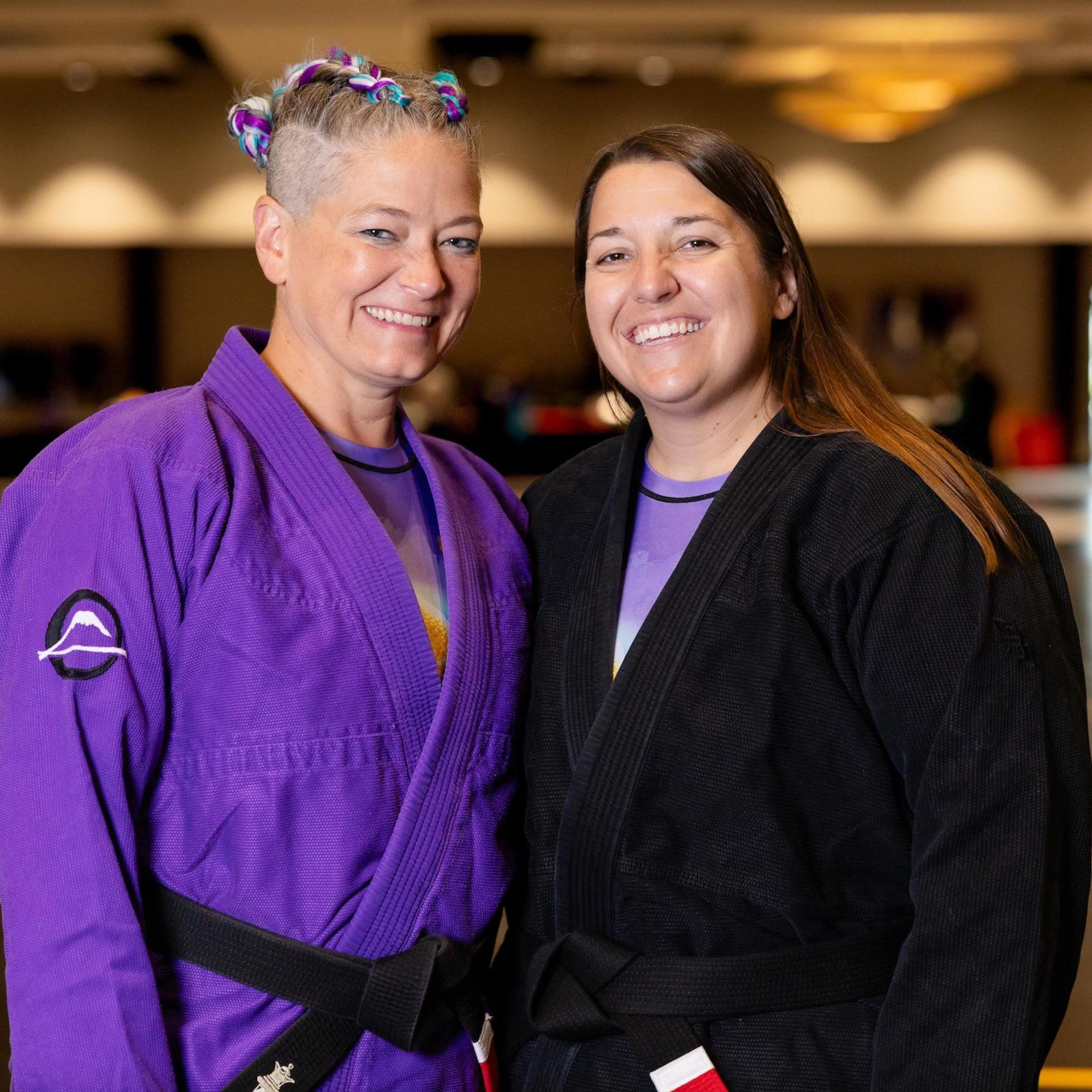
239: Blue Belt Blues and Beyond - Navigating the Plateaus of Jiu Jitsu
Join us as we discuss the ebbs and flows of jiu jitsu. Plateaus are a normal piece of jiu jitsu. You just have to figure out the root cause and we can problem solve how to navigate!
If you love the podcast, share it with a friend!
You can also leave us a 5-star rating in Spotify or Apple Podcasts.
🎧 Listen on Your Favorite App
🎯 New to the Podcast? Start Here
🥋 Learn More About Roll Model Grappling Camp
📱 Connect with Jen & AJ on Social Media
Instagram – @beautyandthegipodcast
Risser!: @jrizzinthehizz on Instagram
AJ: @ajclingerman on Instagram | @roll_model on TikTok
Roll Model Grappling: @rollmodelgrappling on Instagram
🎶 Production
Recording, editing, and production by Risser. Unless you hated it - then AJ did it!
⚠️ Disclaimer
The Beauty and the Gi podcast is presented solely for general informational, educational, and entertainment purposes. It is not a substitute for professional medical, mental health, or coaching advice, diagnosis, or treatment. Please consult your healthcare provider for any condition.
Transcript
White belt Wonderland.
Speaker A:Blue belt blues.
Speaker A:Purple belt purgatory.
Speaker A:Brown belt bs.
Speaker B:What about black belts?
Speaker A:I don't know.
Speaker A:Whatever season of Jiu Jitsu you are in right now, this podcast might just be for you.
Speaker A:Welcome to Beauty and the gi, a podcast about Jiu Jitsu and so much more.
Speaker A:I'm AJ Klingerman, a Brazilian Jiu Jitsu black belt obsessed with Jiu Jitsu.
Speaker B:And I'm Jennifer Risser, a Brazilian Jiu Jitsu black belt full of nonsense and tomfoolery.
Speaker B:And we are here this week to talk about kind of the blue belt blues.
Speaker B:Somebody asked us to talk about that, but we kind of feel like there's plateaus at every belt, so we thought we would just kind of talk about those things and maybe some.
Speaker B:Some strategies on how to get out of that.
Speaker A:Yeah.
Speaker A:So shout out to Katie for giving us this idea.
Speaker A:Obviously, we've talked about this sort of thing a few times before, but we're going to dive a little bit deeper into those blue belt blues especially, and why they happen and what you can do to combat them.
Speaker B:Yeah.
Speaker B:So what are the blue belt blues?
Speaker A:Well, there's kind of this, like, trope that blue belts ghost.
Speaker A:Right.
Speaker B:We've had that happen.
Speaker A:We have had that happen.
Speaker A:But that doesn't mean that, you know, all blue belts have to quit.
Speaker A:Yeah.
Speaker A:I do think that at blue belt, you're kind of at a commitment era of your Jiu Jitsu.
Speaker A:Right.
Speaker A:Like, you're kind of at a crossroads of, like, was blue belt the goal?
Speaker A:Okay, that might be one of the reasons that, like, blue belt's ghost.
Speaker B:Yeah, that guy that ghosted us, it was like, got my blue belt.
Speaker B:Did it check?
Speaker A:Did it?
Speaker A:Yeah, yeah.
Speaker A:He said it meant more to him than his college degree, and he called me the next week and quit.
Speaker A:It's like, had I known, I may have never given you your blue belt.
Speaker B:He deserved it.
Speaker A:He deserved it.
Speaker A:Yeah, absolutely.
Speaker A:But sometimes that is just the goal, and they reach that goal, and then they quit because you are.
Speaker A:You're kind of at a point of like, did I do this just for this belt, or am I doing this for other things?
Speaker A:Am I doing this because I'm a lifetime learner, because I enjoy the community?
Speaker A:Because, you know, I really just enjoy Jiu Jitsu, you know, whatever it is.
Speaker A:But you were at a point in blue belt where it's like, is this it?
Speaker A:Did I do it, or kind of, do you want to keep going to black belt?
Speaker B:Yeah.
Speaker A:And you don't have to make that decision fully.
Speaker A:Like, you're not saying, all right, if I keep training, I'm in it for life.
Speaker A:But there is a little bit of that.
Speaker A:Like, are you.
Speaker A:Are you doing this for the future?
Speaker A:Yeah.
Speaker B:I mean, you know, white belt is like kind of both the hardest and easiest belt.
Speaker A:Yeah.
Speaker B:It's the hardest belt in the sense that you're getting your butt beat all the time.
Speaker B:You kind of have to just keep showing up and hope you learn stuff.
Speaker B:But it's the easiest belt in the sense that you can kind of just come to class and do the thing.
Speaker B:Right.
Speaker B:You can just do the technique for the day.
Speaker B:You can just roll without a ton of intention, and you're going to get better.
Speaker B:You know, if you keep showing up, if you're showing up more than, like, once a week, you're going to improve.
Speaker B:Right.
Speaker B:Once you hit blue belt, you start to need some intention.
Speaker B:I mean, you don't have to be that way.
Speaker B:But without intention, I do think you end up sitting at blue belt a long time, and blue belt's already really long belt.
Speaker A:Yeah, yeah, yeah.
Speaker A:I was a blue belt for four and a half years.
Speaker A:It's a very long time.
Speaker A:And it wasn't like I took time off in that.
Speaker A:Like, I was training constantly, but it.
Speaker A:It is a long time.
Speaker A:Which is another reason that people get blue belt blues.
Speaker A:Not just because they're going to sit there for a really long time without being able to see that tape or next belt of progression, but because it's very deep waters.
Speaker B:Yeah.
Speaker B:There are people who have been at blue belt longer than you've been training.
Speaker A:Yeah.
Speaker A:And then you have to fight them.
Speaker A:Yeah.
Speaker B:And I mean, you know, you were at blue belt 4 1/2 years, and that was long for you because you were training constantly without any layoffs, and you were competing constantly.
Speaker B:But four and a half years is not uncommon.
Speaker B:At blue belt.
Speaker B:Yeah.
Speaker B:For you, that was sort of not appropriate, I would say, you know, but generally speaking, that happens.
Speaker A:Yeah.
Speaker A:Yeah.
Speaker A:As a black belt now, who does promotions?
Speaker A:If I would have been my student, I wouldn't have taken that long.
Speaker A:Right?
Speaker A:Like, exactly.
Speaker A:I was training and constantly and competing every chance I got.
Speaker A:But still, like, when I remember my first competition as blue belt, I really got my blue belt because my coach didn't want me to fight my teammate.
Speaker A:That was the only reason I got promoted.
Speaker A:Otherwise, I probably still would have been a white belt.
Speaker B:Not because you didn't deserve it.
Speaker A:Not because I didn't deserve it.
Speaker A:I was a White Belt for 13 years.
Speaker A:That was an on and off.
Speaker A:Though.
Speaker A:But I.
Speaker A:So I got my blue belt on, like, Monday and competed on Saturday.
Speaker A:And the girl I fought had been a blue belt for two and a half years.
Speaker A:And I just remember being like, oh, I just got this.
Speaker A:This is still shiny.
Speaker A:Like, it can be kind of scary.
Speaker A:And I think also when you have your blue belt, you have this, like, sense of, well, now white belts shouldn't be able to beat me.
Speaker B:Oh, yeah, for sure.
Speaker A:That's just not true.
Speaker B:It's not true.
Speaker B:White belts could beat me.
Speaker B:Gabriel tapped me the other day.
Speaker B:Yeah, it was awesome.
Speaker A:He did a great job.
Speaker A:I think once you get to black, you, like, have that, like, loss of ego where you're just like, it's okay.
Speaker A:Like, the kids can tap me on occasion, or, you know, like, there's gonna be a purple belt monster in the gym that's gonna beat me up.
Speaker A:Like, that's not that big of a deal.
Speaker A:But at blue belt, you think, oh, well, now I've got color on my belt.
Speaker A:That means I have to know everything.
Speaker A:I have to beat up everybody that's a white belt.
Speaker A:Like, it's just not true.
Speaker B:And you said about black belt that your ego should kind of be dead at that point, but I don't think that's the case.
Speaker B:You know, it's.
Speaker B:It's certainly our goal that people do not have that ego.
Speaker B:As they progress, you know, they start working on that, but that's not always the case.
Speaker B:And so, you know, we've had some people we've really struggled with over the years in terms of ranking them because of their ego and nothing more.
Speaker A:Yeah, yeah, yeah.
Speaker A:Cuz you do have to kind of let go of that a little bit.
Speaker A:Like, you have to be able to work with people at all different levels and.
Speaker A:And be able to get beat up by different people.
Speaker A:Yeah, absolutely.
Speaker A:It's hard.
Speaker A:Really hard.
Speaker A:Yeah.
Speaker B:And you know, Blue Bell, things aren't just new constantly anymore.
Speaker A:Right.
Speaker B:You know, you've seen not all the Jiu Jitsu.
Speaker B:It's very hard to have seen all the Jiu Jitsu, but you've seen a lot of Jiu Jitsu in that time.
Speaker B:You've been training several years.
Speaker B:You know, it takes a while to get a stripe.
Speaker B:You know, there are some gyms where blue belt's two years.
Speaker B:That's not our gym, you know, so for our gym particularly, you're gonna sit at blue belt several years.
Speaker B:And if you're training once a week or less, you're gonna sit there a very long time.
Speaker B:Because it's hard to Progress when you're only training, you know, once a us.
Speaker B:And I think that's common.
Speaker B:Right.
Speaker B:At white belt, it's easy to feel enthusiastic, things are new.
Speaker B:You're kind of addicted to it.
Speaker B:Right.
Speaker B:But at blue belt, life starts to get in the way if it didn't before, you know, and, like, maybe not get in the way is the right word, but, you know, you're.
Speaker B:Sometimes your priorities shift.
Speaker B:You have a kid, you change your job.
Speaker B:You know, life gets in the way.
Speaker B:As you train Jiu Jitsu, you can't train as long as we've trained and not have had life get in the way of various people points.
Speaker A:Yeah.
Speaker A:There's, like, seasons, right.
Speaker A:There's seasons where you're obsessed and want to be on the mat all the time, and there's seasons where, like, that's just not as possible.
Speaker A:And you're getting there when you can, but the clock is not running.
Speaker A:Just because you have that belt, right.
Speaker A:Like, it doesn't mean, oh, well, I've been a blue belt for this many years.
Speaker A:Why don't I have this many stripes or whatever that is?
Speaker A:Because it just doesn't work like that.
Speaker A:Like, it's time on the mat training and progressing.
Speaker A:And progressing.
Speaker A:Yeah, yeah.
Speaker A:And that's really hard.
Speaker A:And that does give people the blues.
Speaker A:Yeah.
Speaker B:And pearl belts are good at Jiu Jitsu.
Speaker B:Not that blue belts aren't good at Jiu Jitsu, but getting to purple belt is hard.
Speaker B:You know, once you get to purple belt, you're not coasting, but you can make it to black if you put the time in.
Speaker A:Right.
Speaker B:But the transition from blue to purple is so significant.
Speaker A:Yeah.
Speaker B:And that can be a hard thing to navigate.
Speaker B:You know, there are different type of Jiu Jitsu players.
Speaker B:Not all of them are, you know, watching Jiu Jitsu on their downtime and coming in with things to work on and that sort of thing.
Speaker B:But those are the people that are ranking up fastest, improving fastest.
Speaker A:And whatever your journey is, is fine.
Speaker A:Like, that's your journey.
Speaker A:You just have to be kind of realistic about it.
Speaker A:Right.
Speaker A:Like, if you're only thinking about Jiu Jitsu, the hour that you're on the mat, that's just not going to be enough for you to actually progress.
Speaker A:Yeah.
Speaker B:It's just going to take a lot longer.
Speaker B:And you need to be getting those rounds in.
Speaker B:You know, I think you need to be honest with yourself on how many rounds am I truly doing?
Speaker B:A week, a month?
Speaker B:And how many of those rounds are actually not necessarily serious rounds, but they're rounds where I'm learning something or I'm sharpening something, where you have intention.
Speaker A:Yeah.
Speaker B:Right.
Speaker A:Like that you're paying attention to what's happening in the round a little bit.
Speaker A:Whether you're trying something or you're trying to figure out what they're doing to you or whatever that is, but there's intention behind it.
Speaker A:Yeah.
Speaker B:So I think not getting stripes as quickly can be a hard thing at bluebell, I think that is something where you feel like you're in a plateau, or you get your blue belt and people start putting it on you a little bit more.
Speaker B:Right.
Speaker B:You know, we're nice to the white belts as much as we can be.
Speaker B:You know, you get your blue belt, and it's like, okay, well, it's.
Speaker B:This is the next level.
Speaker B:This is the next thing.
Speaker A:You kind of get, like, greenlit at blue belts.
Speaker B:Yeah.
Speaker B:I mean, we were talking about advice for one of our white belts today, and it was basically like, if it's a blue belt, you don't need to worry about smashing them.
Speaker B:Smash away.
Speaker B:Right.
Speaker B:If they have color on their belt, have at it.
Speaker A:Yep.
Speaker A:I remember when Megan first got her blue belt, she was very much like, oh, this is totally different.
Speaker A:Like, I feel like I haven't rolled with any of you guys before.
Speaker A:Everybody was like, okay, she's a blue belt now, and, like, we can actually beat her up a little bit.
Speaker B:Not that you can't put it on the white belts, but I think we put it on them differently once they're a blue belt.
Speaker A:Yeah.
Speaker A:You have, like, that recognition that, okay, like, they have some knowledge under their belt and they're ready for it.
Speaker B:Yeah.
Speaker B:I think also, people think of, like, receiving their blue belt, they're just going to be a completely different person.
Speaker A:It's like you.
Speaker B:It's just a different color belt.
Speaker B:You're still the same person with the same knowledge.
Speaker B:Yep.
Speaker A:Yeah, that's a good point.
Speaker A:Like, the blue belt isn't magic.
Speaker A:It's not this thing where you get it and you're like, okay, now everything is different.
Speaker B:Yeah.
Speaker A:So do you have advice for people that are struggling with that blue belt blues?
Speaker B:Yeah, I mean, I think you have to figure out the reason, the underlying reason first.
Speaker B:I think the answer for most issues is give yourself some grace and try to have some intention if you're able to.
Speaker B:So, you know, are your blue belt blues because life's gotten in the way?
Speaker B:Jiu jitsu will always be there.
Speaker B:Are your blue belt blues because you had an injury or a layoff, you Know, for me, I've had three surgeries in the last year.
Speaker B:I have not gotten to train jiu jitsu the way I want.
Speaker B:I low key, kind of feel like I'm back, but I have to give myself grace because my cardio is not where it was.
Speaker B:You know, my technique is still there to some extent, but I've got a lot of stuff that I can work on and do.
Speaker B:You know, I say that as a black belt, but, I mean, it's even more so as a blue belt.
Speaker B:Like, I. I at least get to be a person with black belt knowledge.
Speaker A:Exactly right.
Speaker B:And, like, I'm a decent sized person.
Speaker B:Right.
Speaker A:Yeah.
Speaker A:I can handle this.
Speaker B:Yeah.
Speaker B:I'm not the tiniest blue belt in the room.
Speaker B:Right.
Speaker B:Like, that's a different world.
Speaker B:So I think giving yourself grace and not expecting yourself to be where you were, it's the same thing, like lifting.
Speaker B:Right.
Speaker B:You and I have not actively lifted, you know, consistently in a long time.
Speaker B:So to go back in there and be like, well, I'm gonna go deadlift 300 pounds.
Speaker B:I'm gonna break my back.
Speaker A:Yeah.
Speaker A:Yeah, you're gonna be really sorry.
Speaker B:Yeah.
Speaker B:So it's kind of the same thing.
Speaker B:It's, you know, honor your body with where it is and figure out what the next step is.
Speaker B:You know, how do you.
Speaker B:How do you get better and what are the things you're working on?
Speaker B:Focus on small wins.
Speaker B:Focus on specific things.
Speaker B:You know, people start to recognize what your game is.
Speaker B:That just means you add the next thing.
Speaker B:It can't just be you're spamming the same thing.
Speaker B:That's what white belt is, blue belt is.
Speaker B:We're adding another thing to that.
Speaker B:Or we're collecting as many techniques as we can, and we start to figure out what works for us.
Speaker A:Yeah, I think having that intention because, like, I think you can get bored at blue belt because it's like, like you said, you've seen all of the things, not all of the things, but, you know, you've Learned an Americana 8,000 times at this point, but having intention of, like, how did I get here?
Speaker A:How do I set this up better?
Speaker A:Or finding what your game is.
Speaker A:Pick a specific guard.
Speaker A:Like, what specific guard do you want to work on?
Speaker A:And if you are a top player, great.
Speaker A:Have a specific guard that you want to work on.
Speaker A:Like, get out of your comfort zone and realize why you like jiu jitsu to begin with.
Speaker A:Because it was.
Speaker A:Everything was new and you were learning so quickly, and you're getting striped so quickly.
Speaker A:Like, at white belt in Comparison.
Speaker A:You do get stripes very quickly, so you can't get used to that.
Speaker A:But, like, really deep dive into something.
Speaker A:Like, figure out what your Jiu Jitsu is starting to look like as you progress into purple.
Speaker B:Yeah, I think boredom can be a big source of blue belt blues or feeling like you're plateauing or even, you know, sometimes we've had some, like, bigger guys kind of feel like, what's the point of Jiu Jitsu?
Speaker B:I win all the time.
Speaker B:And the thing is, you know, our coach, Rachel Casillas, you know, she has won some big titles training with, like, white belts.
Speaker A:Y.
Speaker B:Right.
Speaker B:Like, she found some people her size, and she figured it out.
Speaker B:And so, you know, if you're doing the same move to everybody, and you've got £50 on all of them.
Speaker B:That's probably why you're bored.
Speaker A:Yeah, right.
Speaker B:You know, add another sweep to that.
Speaker B:Maybe work on your escapes.
Speaker B:Work on something new.
Speaker B:Find something on Instagram.
Speaker B:I do that all the time.
Speaker B:You know, like, oh, I learned that on Instagram yesterday.
Speaker B:Let's see if I can do it.
Speaker B:Oh, that didn't work.
Speaker B:Okay, maybe I could drill it.
Speaker A:Yeah, maybe you shouldn't have tried it on the black belt first.
Speaker B:Who knows?
Speaker B:But it keeps things interesting, right?
Speaker A:Exactly.
Speaker B:It gives you a laugh.
Speaker B:It's, you know, it's just.
Speaker B:It's something different.
Speaker B:If you're not trying something different or doing something differently, it's Groundhog Day.
Speaker B:And that's how we lose.
Speaker B:Blue belts is.
Speaker B:And, you know, a piece of that is we.
Speaker B:Your coach can do all sorts of things to try to help you.
Speaker B:You know, even when I'm teaching, I'm saying, okay, I recognize you've learned a knee cut 17,000 times, but I've still watched you guys do it, or you're trying to do it on me, and you're still missing details.
Speaker B:So if you've learned this a bunch of times, let's focus on this specific detail.
Speaker B:You know, there are always things that you can do to tighten up your game or work on something a little differently, you know, so, yeah, I think that's important.
Speaker A:Yeah, I do, too.
Speaker B:You know, you can't.
Speaker B:You can't expect your coach to fix it for you.
Speaker B:You know, coaches are there to help you and guide you.
Speaker B:But, you know, we were talking about today a student that I'd like to work with on something specific.
Speaker B:Right.
Speaker B:And a piece of what I said was, until that person's ready for that, I can't actually help them.
Speaker B:Yep.
Speaker B:You know, I. I have worked with them a little bit.
Speaker B:I have given them some thoughts, but until they're really ready to receive that and work on that thing, there's really nothing else I can do.
Speaker A:Yeah.
Speaker A:Yeah.
Speaker A: first started this podcast in: Speaker A:I want you to hear this podcast and want to do it.
Speaker A:So I don't want you to hear this and go, oh, I'm a white belt and I'm so excited about Jiu Jitsu, but I'm gonna get to blue and hate it.
Speaker B:Yeah, don't give me a job.
Speaker A:Yeah.
Speaker A:And so just, you know, I think it's a little bit about managing expectations and recognizing that blue is going to be different.
Speaker A:So, you know, you have to know that it is going to be a little bit different and manage those expectations.
Speaker A:So know that, like, when you get your blue belt, people are going to come after you harder.
Speaker A:Competition might be harder, but it's also somehow more fun.
Speaker A:And you're going to be sitting there a while.
Speaker A:Like, most of us do not do Jiu Jitsu for those two inches around our waist.
Speaker A:Yeah.
Speaker B:I mean, honestly, if you're doing it for that, pick a different sport.
Speaker B:Like, judo ranks way faster, assuming you're training.
Speaker A:Yeah, yeah.
Speaker A:So that's.
Speaker B:That's my thought.
Speaker B:Yeah, I agree.
Speaker B:And, you know, I think a thing to remember is Jiu Jitsu is supposed to be fun.
Speaker B:And so we're not saying you have to come in with intention every single day.
Speaker B:Like, think about Max.
Speaker B:That man has had almost no intention the whole time I've ever known him in terms of training.
Speaker B:But Max and I have been training the same amount of time, and I'm a black belt, and he's a purple belt, and he's a good purple belt.
Speaker B:Don't get me wrong, but Max is a different kind of Jiu Jitsu player, and it's okay to be that kind of Jiu Jitsu player, but it's.
Speaker B:Again, it's managing those expectations.
Speaker B:You know, he isn't dying to get his brown belt, much less his black belt.
Speaker B:Right.
Speaker B:And I don't think he's sitting around thinking, well, where's my next stripe?
Speaker B:Like, you know, I'm doing so good in the gym.
Speaker B:What's happening?
Speaker B:You know, he's just.
Speaker B:He's coming in to have fun and relieve stress, and it's okay to be that person.
Speaker B:You just can't expect to get to black belt in eight years when you're not coming in with intention.
Speaker B:You Know, and so it's valid to be whatever kind of jiu jitsu player you want to be.
Speaker B:This podcast is specifically about dealing with plateaus and the blue belt blues and that sort of thing.
Speaker B:You know, if you're in a plateau, let's figure out how to, you know, diagnose that or deal with that.
Speaker B:Let's mix it up.
Speaker B:Let's try something new.
Speaker B:Let's go in with an intention of working on something.
Speaker B:Let's record our rounds and see.
Speaker B:You know, I'm someone who can remember my rounds in my brain, so I can kind of say, okay, well, that didn't really go really well.
Speaker B:But some people, they need to be able to see their rounds.
Speaker B:And even for me, you know, seeing it is different than feeling it.
Speaker B:So, you know, there are so many things that you can do to mix up your training.
Speaker A:Okay, so I have a couple of examples.
Speaker A:One from Katie, a blue belt.
Speaker A:Been a blue belt about a year.
Speaker A:And one from my friend Chelsea, who is now a black belt.
Speaker A:Congratulations, Chelsea.
Speaker A:Yeah.
Speaker A:But out of brown belt, you know, she's.
Speaker A:She's tiny and a little bit older.
Speaker A:Like, both of them were struggling with kind of getting beat up in the gym by people younger or stronger or whatever, and then they had the blues because they feel like every single session, they're just coming in and getting beat up.
Speaker A:How do you deal with that?
Speaker B:Do you.
Speaker B:Do we have any insight on, like, the source of the struggle?
Speaker B:You know, is it just sort of like, I feel like I should be better?
Speaker A:Yeah, I think that is it.
Speaker A:I think it's.
Speaker A:I think it's.
Speaker A:I feel like I should be better and that I shouldn't always be getting beat up.
Speaker A:There should be somebody that I can also.
Speaker A:And I'm sure for both of them, there are people that they can beat up, but it feels like they're just constantly getting murdered.
Speaker B:Constantly is tough.
Speaker B:Yeah.
Speaker B:I mean, a piece of that, I think, is what we talked about, which is, give yourself grace, you know, Like, I was released from surgery, I don't know, a couple weeks ago maybe.
Speaker B:And my first round back, it was me and Elizabeth, and that woman tried to murder me, which is awesome.
Speaker B:Love Elizabeth.
Speaker B:She's an awesome training partner, but she did, in fact, murder me a fair amount.
Speaker B:You know, she's a blue belt.
Speaker B:For those of you that don't know Elizabeth, she's an awesome blue belt, but I'm a black belt, you know, so, like, if your ego starts coming to play, you know, I'm much bigger than Elizabeth, and I'm Several ranks above her.
Speaker B:But I still hadn't been training in a while.
Speaker B:And frankly, like, Elizabeth is a good enough blue belt that you give her an inch and she's taken it.
Speaker B:She is not giving it back without you earning it.
Speaker A:Yeah.
Speaker B:So I think a piece of it is, you know, watch them rolling with other people, you know, are they putting it on other people?
Speaker B:Yeah, maybe recognize that person's good at Jiu Jitsu.
Speaker B:Like, for me, there's nothing wrong with getting beaten up by someone who's good at Jiu Jitsu.
Speaker B:You know, like Duffy, He's a purple boat who comes and trains with us.
Speaker B:That man's gonna whoop my butt if he feels like it.
Speaker B:That's just a fact.
Speaker B:I'm gonna have some cool moments.
Speaker B:I'm probably gonna sweep him a time or two.
Speaker B:But if you're keeping score, I'm losing most of those rounds unless he's tired or doesn't feel like it for some reason.
Speaker B:And that's just okay.
Speaker B:You know, Duffy is good at Jiu Jitsu.
Speaker B:I mean, I mentioned Gabriel tapping me the other day.
Speaker B:That's a man sized teenager, right?
Speaker B:With man strength and doing Jiu Jitsu.
Speaker B:We taught him.
Speaker B:He caught me in the submission.
Speaker B:We taught him.
Speaker B:Like, I.
Speaker B:There's a piece of that that's really cool.
Speaker B:Maybe that isn't helpful for Katie and Chelsea.
Speaker B:I don't know how much they, like, teach and that sort of thing, but I think giving yourself grace is important.
Speaker B:Chelsea, you're tiny, you know, like, people are gonna put it on you at times like that.
Speaker B:That happens.
Speaker B:I don't really have that perspective, you know, in terms of being tiny.
Speaker A:Right.
Speaker B:But I sure am slow.
Speaker B:So I do have that perspective of, you know, sometimes people just put it on you.
Speaker B:That's Jiu Jitsu.
Speaker B:And that's the fun of Jiu Jitsu, I think.
Speaker A:You know, I think so too.
Speaker A:I think if you're always winning, kind of almost, what's the point?
Speaker A:Yeah.
Speaker A:You know, like, it's like cool.
Speaker A:I went up and beat everybody up again.
Speaker A:Like, then you don't feel like there's any progression.
Speaker A:I think you need people that are kind of beating you up.
Speaker A:And with Katie, she was like, yeah, the 130 pound teenager or whatever she said.
Speaker A:And I was like, yeah, he's fast.
Speaker A:You know, like they have.
Speaker A:Those kids have so much energy and man strength.
Speaker A:And man strength, yeah.
Speaker A:Yeah.
Speaker B:I mean, I think that's a thing to keep in mind.
Speaker B:Like, remember what you have and what they have.
Speaker B:If they're faster if they're stronger, you know, those tiny people can really be sticky.
Speaker B:You know, Katie, you're strong and you're good at Jiu Jitsu, so people are still gonna get one up on you.
Speaker B:Right?
Speaker B:You're a blue belt.
Speaker B:As you rank up, it's still going to happen.
Speaker B:And I think.
Speaker B:I think a piece of doing Jiu Jitsu is just making peace with that.
Speaker B:And it's also making peace with.
Speaker B:I'm still gonna feel some type of way sometimes, and it's okay, too, you know?
Speaker B:Like, just the other day, I was kind of like, oh, man, that person really put it on me.
Speaker B:It doesn't really bother my ego, but I hope.
Speaker B:I hope they don't think less of me.
Speaker B:You know what I mean?
Speaker B:And so it's like, it wasn't really about, like, I don't care if that person beats me up, I don't care who beats me up, as long as, you know, they're doing good technique and that sort of thing.
Speaker B:But I think it's okay.
Speaker B:It's okay to feel bad about it, but I hope that you also can give yourself your flowers.
Speaker B:Right.
Speaker A:Yeah.
Speaker B:Things that you did well, little moments, you know, Jiu Jitsu isn't all about who won or who lost, especially in the gym.
Speaker B:It's about, oh, but I. I gotta bite on that sweep I've been trying, or I did that escape I've been.
Speaker A:Working on, or even I recognized when I should have done that.
Speaker A:I may not have been able to accomplish it yet, but, like, oh, that was that moment.
Speaker A:That's.
Speaker A:That's a position I was looking for.
Speaker A:To hit, whatever.
Speaker A:Yeah.
Speaker B:And it doesn't make you less of whatever rank you are just because you're losing.
Speaker B:I mean, I'm a black belt, and there is always going to be white belts that can come in and beat me up.
Speaker B:That's just a fact.
Speaker B:I'm not going to.
Speaker B:Of the size and strength, sometimes the speed.
Speaker A:Yeah.
Speaker B:The athleticism, the, you know, height.
Speaker B:You know, wrestlers are going to come in and beat me up sometimes.
Speaker B:Like, that's just gonna happen.
Speaker B:And that's.
Speaker A:That's okay.
Speaker B:I mean, that's kind of the beauty of Jiu Jitsu is it's for everyone.
Speaker B:Differently.
Speaker A:Yeah, differently.
Speaker A:And just because someone beats you and around doesn't mean you don't know Jiu Jitsu.
Speaker A:It doesn't mean you're not good at Jiu Jitsu.
Speaker A:And sometimes styles match up differently.
Speaker A:Like, maybe you beat me up and I beat this person up and that person beats you up.
Speaker A:You know, like, yeah, totally.
Speaker A:It, it's just different.
Speaker B:Yeah.
Speaker B:I think Jiu Jitsu allows for all types of people and players.
Speaker B:You know, there are some people who are going to be better at knowing technique and showing it versus hitting it live.
Speaker B:That's okay.
Speaker A:Yep.
Speaker B:There are going to be some people who are better at hitting it live than showing it and explaining it.
Speaker B:Right.
Speaker B:That's, that's just a fact.
Speaker B:So I think maybe knowing what kind of player you are and just kind of recognizing, you know, I'm really good at those details, you know, like, I can teach really well or I do X really well.
Speaker B:You know, I think giving yourself grace, it gives you the longevity in Jiu Jitsu.
Speaker B:You know, if you're sweating the small stuff of, you know, I'm getting beat up all the time, that's Jiu Jitsu.
Speaker B:That's the sport we chose.
Speaker A:Yeah.
Speaker B:You know, I don't mean to sound harsh.
Speaker B:That's just Jiu Jitsu, you know, if you can't walk out with a smile on your face when you got beat up, it's kind of a hard road, you know, you're not.
Speaker B:And don't get me wrong, you're not going to be happy every time.
Speaker A:Yeah.
Speaker A:Like, there are certainly nights where it's.
Speaker B:Like, man, I really suck tonight.
Speaker A:Oopsie daisies.
Speaker A:When you don't turn on the radio on your way home, sit in silence,.
Speaker B:Think of your misdeeds, Go cry in the locker room.
Speaker A:Maybe it's all, you know.
Speaker A:Yeah.
Speaker B:But frankly, you know, the nights where I'm like, man, that was a rough night of training.
Speaker B:I did not do well.
Speaker B:I did not come in with intention.
Speaker B:I was just doing random stuff.
Speaker B:And so not to make Jiu Jitsu all about having a job or having intention, but I do think that can really help sometimes.
Speaker A:Yeah, I do too.
Speaker A:I think this was a good talk.
Speaker B:I don't know if this was helpful to Chelsea or Katie, but hopefully it was.
Speaker B:You're both very good at Jiu Jitsu.
Speaker B:I hope you can give yourself the grace to recognize that and keep going.
Speaker B:For anyone.
Speaker B:You don't have to roll with anyone you don't want to.
Speaker B:You know, if people are hurting you, if people are not safe, don't roll with them.
Speaker B:I'm a 38 year old woman in medium shape.
Speaker B:I don't roll with any man off the street.
Speaker B:Right.
Speaker B:We had like a 19 year old come in on Thursday and try class and fight the other teenagers.
Speaker B:That's great for them.
Speaker B:I'm not fighting him for A bit.
Speaker B:You know, like, that's just.
Speaker B:I'm not doing that.
Speaker B:My ego is not bothered that I'm not rolling with him.
Speaker B:So, you know, I think you also get to choose your partners.
Speaker B:That being said, don't choose them with ego.
Speaker B:Right.
Speaker B:Don't just choose the easy rounds, choose the hard rounds.
Speaker B:That's actually how you get better at Jiu Jitsu.
Speaker A:Agreed.
Speaker B:Agreed.
Speaker B:Choose the Duffy.
Speaker A:Some nights you just don't have it in you.
Speaker A:But as much as you can choose the hard rounds, that really will make you improve.
Speaker B:Absolutely.
Speaker A:And just because you get beat up on the mat does not mean you have to beat yourself up when you leave.
Speaker B:Yeah, people already did that.
Speaker B:You don't need to do that.
Speaker B:Exactly.
Speaker A:Yeah.
Speaker A:So hopefully this was helpful.
Speaker A:If you are struggling at whatever point you're at, whatever belt you're at, and you just need to be talked through it a little bit, contact me.
Speaker A:I'm happy to talk to you about it.
Speaker B:Yeah.
Speaker B:I mean, really, I feel like the only thing we haven't talked about in terms of, like, what causes plateaus that I can think of off the top of my head is sort of imposter syndrome.
Speaker B:You know, I do think you hit a point where you just feel some imposter syndrome of like, I should be better, I should know more, I should know all the Jiu Jitsu again, kind of recognize what you're capable of.
Speaker B:You know, if you trust your coach, you should trust the rank they gave you.
Speaker A:Yeah.
Speaker B:Amy.
Speaker B:Dylan.
Speaker A:And if you knew all of Jiu Jitsu, what's the point in still doing it?
Speaker A:You know?
Speaker A:Like, that's the beauty of Jiu Jitsu.
Speaker A:You can be 4th degree black belt and still learning new moves.
Speaker A:Yeah.
Speaker B:Jiu Jitsu evolves and you're constantly tuning things up over time.
Speaker B:I told Elizabeth the other day that I should have to start back over at white belt for my chokes because, like, I'm just not someone who likes to do chokes.
Speaker B:I have dainty fingers.
Speaker B:I just, I.
Speaker B:They're not my favorite, you know, and so that's something that I've been working on, is just being a little bit better at choking people.
Speaker A:Yeah.
Speaker B:So I think that you don't have to know everything.
Speaker B:You don't have to be good at everything.
Speaker B:It's okay to say, I don't know the answer to that, or I don't know that, or, let's learn more things.
Speaker A:You know, my favorite thought about, like, getting smashed too.
Speaker A:Like, if.
Speaker A:If it's a round and you're just under Someone's mount the whole time or in their side control or whatever it is, is that eventually the bell's gonna go off.
Speaker A:Like, you're gonna make it out.
Speaker A:Like, so I think that can be helpful sometimes when you're kind of in that, like, downward spiral.
Speaker A:Just thinking, I'm gonna just keep trying to create centimeters.
Speaker A:If I can just, like, bit by bit, try to give myself some space to breathe or give myself a little bit of room out of here.
Speaker A:Eventually, if I don't make it out, that bell will go off.
Speaker A:Yeah.
Speaker B:Or I'm gonna make it so hard for them to tap me.
Speaker A:Yes.
Speaker B:You know, they're not getting a tap out of me.
Speaker B:I don't mean ego hurt yourself.
Speaker B:I just mean keep your arms tight.
Speaker B:Really fight the tap.
Speaker B:You know, there are little wins in every round if you look for them.
Speaker A:Yep.
Speaker A:Yep.
Speaker A:All right.
Speaker B:Okay.
Speaker B:Well, feel free to reach out to AJ if you have any other thoughts for.
Speaker B:For us.
Speaker B:Or again, if you need advice.
Speaker B:AJ is an excellent advice giver.
Speaker A:Happy to help.
Speaker B:She's the best.
Speaker B:All right, well, let's wrap this one up because I think we're probably past our usual time.
Speaker B:Where can they find us?
Speaker A:You can find us at Beauty and the Geek podcast on Instagram or I'm AJ Klingerman everywhere you go.
Speaker B:And if you didn't know, we've started doing video as well.
Speaker B:It's not currently up on the YouTube, but it's going to be at some point.
Speaker B:So we're figuring it out.
Speaker B:Yeah, we're working on it.
Speaker B:So at some point, you'll hopefully see our delightful faces.
Speaker B:Yes.
Speaker A:Also, if you aren't already registered for Role Model Women's Only Grappling Camp.
Speaker A:It is coming up very quickly.
Speaker A:We're under two months out.
Speaker A:It's July 10th through the 12th in Indianapolis, Indiana.
Speaker A:You can register at role models wanted.com and we have five amazing instructors, including my beautiful co hoster here, Danielle Guevara, Beatrice Gin, Adele Fornarino, and Rachel Casillas.
Speaker B:Yeah.
Speaker A:So we're really excited.
Speaker B:Please get registered.
Speaker B:If you haven't spread the word.
Speaker B:We definitely have space available.
Speaker B:Yeah.
Speaker A:And we could use a couple more helpers.
Speaker A:So if you want to help with, like, cleaning the mats or setting up the mats, anything like that.
Speaker A:We do have a couple sponsorships available for those helpers.
Speaker A:So we have a couple, but we could use a couple more.
Speaker A:Yeah.
Speaker B:Please come help me set up the mats.
Speaker B:It's not super hard.
Speaker B:It just.
Speaker B:We need a few sets of hands, and I would really appreciate it.
Speaker B:And I promise.
Speaker B:I'm fairly nice about it.
Speaker B:You're so nice.
Speaker A:I'm not.
Speaker B:Jiu Jitsu Zillow.
Speaker A:No, definitely not.
Speaker B:Yeah, we'll have a good silly time, and then we'll get to Jiu Jiu Jitsu.
Speaker A:Yeah.
Speaker A:All right, I think that wraps it up.
Speaker A:So until next time, we'll see you on the mat.
Speaker A:Beauty and the Ghee is a production of the Sleepy Pibble Podcasting Company and.
Speaker B:Brought to you by Role Model Grappling P.
Speaker A:As far as, like.
Speaker B:Will you pause for a second?
Speaker B:The popo's out to get you for your stonkiness.
Speaker B:They're coming for you.
Speaker B:You and Bubs.
Speaker A:So there's a possum out by the.
Speaker B:Where is he?
Speaker A:He's against the.
Speaker A:Yeah.
Speaker B:Oh, there's two of them.
Speaker B:Oh, my God.
Speaker B:I've always wanted a possum.
Speaker B:Guys, we're adopting a possum.
Speaker A:It's one of my favorite scenes in How I Met yout Mother.
Speaker B:Oh, I love possums.
Speaker B:Okay, I really got distracted.
Speaker A:I'm so sorry.
Speaker A:I had to point him out because he was so cute.
Speaker A:Sorry.
Speaker B:Where did we even leave often?
Speaker A:Welcome to Role Mod.
Speaker A:Oh, God dang it.
Speaker B:Welcome to Role Model in the key.
Speaker A:Let's try again.
Speaker B:I don't know how this podcast ends.
Speaker B:I'm gonna be honest.
Speaker A:I can't ever remember something about, tune in next time.
Speaker B:Yeah.
Speaker A:Okay.
Speaker A:Tune in next time and we'll see you.
Speaker B:I don't think that's how it goes.
Speaker A:Something like that.
Speaker B:So until next time.
Speaker A:Yeah.
Speaker B:All right.